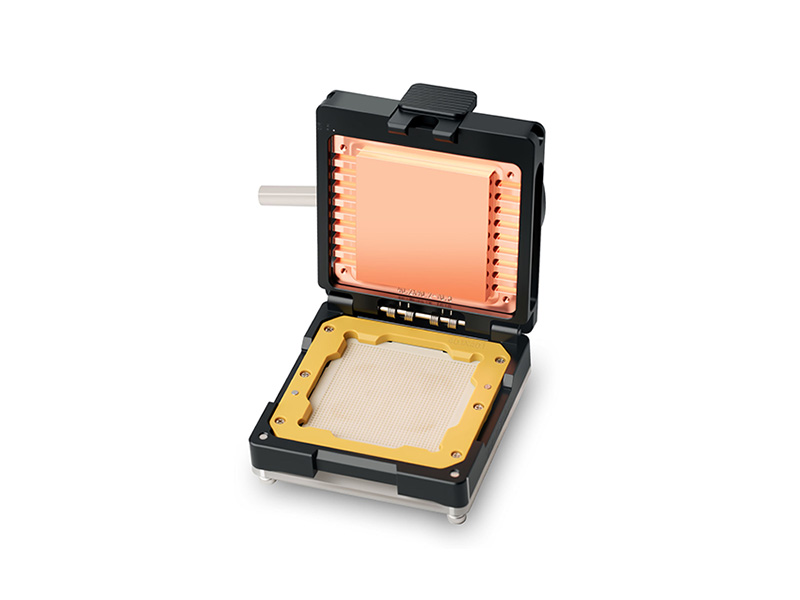
A burn-in test socket, also known as a burn-in chamber or burn-in rack, is a type of aging test equipment used for product testing. Its purpose is to test the aging characteristics, durability, and safety performance of products. When selecting a burn-in test socket, the following points should be considered:
1. Functional Requirements of the Burn-In Test Socket
When selecting a burn-in test socket, the first consideration should be your own functional requirements, including the application scope of the burn-in test socket, as well as the intended use, environmental requirements, load specifications, etc. Based on current application needs, you can determine the required load specifications, as well as test environment conditions such as temperature and humidity, to identify the necessary performance level of the burn-in test socket.
2. Accuracy of the Burn-In Test Socket
When selecting a burn-in test socket, accuracy should be taken into account to ensure the testing precision of the device. Generally speaking, the accuracy of a burn-in test socket should meet national standards, satisfy application requirements, and guarantee test precision.
3. Safety of the Burn-In Test Socket
When selecting a burn-in test socket, safety should be considered to ensure safe operation. In general, the safety of a burn-in test socket should comply with national standards and include safety features such as electromagnetic compatibility (EMC) and electrostatic discharge (ESD) protection. When choosing a burn-in test socket, its safety performance must be evaluated to ensure safe operation.
4. Cost-Performance Ratio of the Burn-In Test Socket
When selecting a burn-in test socket, the cost-performance ratio should be considered—that is, the balance between price and performance. Generally speaking, a burn-in test socket with a high cost-performance ratio should be chosen based on your specific needs to achieve better performance and service.
5. After-Sales Service for the Burn-In Test Socket
When selecting a burn-in test socket, the manufacturer's after-sales service should be considered to avoid quality-related issues. Generally, manufacturers that offer quality assurance can provide good after-sales service, including repair services and technical support.
The above are the key precautions for selecting a burn-in test socket. You should make a reasonable choice based on your actual situation and specific needs to obtain better performance and service.

 WeChat
 WeChat Account
 Chinese
 English