1. Structural Design of Chip Test Sockets
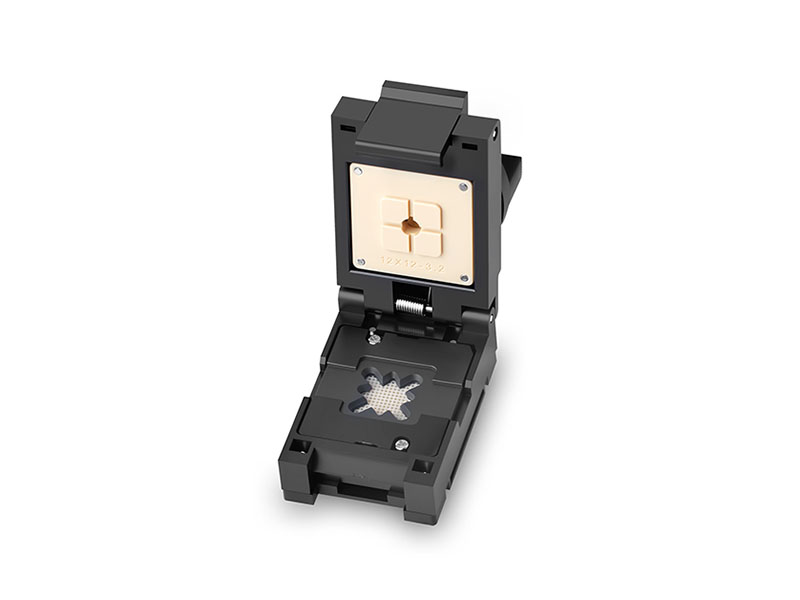
A chip test socket mainly consists of two parts: first, the chip support base, which is used to support and position the chip; second, the test head, which is used to perform chip testing. The structural design of the chip test socket must meet the specific requirements of chip testing, featuring high precision, high stability, and strong anti-interference capability.
2. Model Selection for Chip Test Sockets
The model selection of a chip test socket should be determined based on different chip testing requirements. Common types include single-chip test sockets, multimedia chip test sockets, and industry-specific chip test sockets. The appropriate model should be selected according to the chip testing requirements to meet various testing needs.
3. Working Principle of Chip Test Sockets
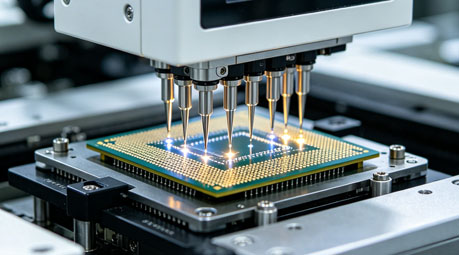
The working principle of a chip test socket is to fix the chip onto the chip support base and then perform testing through the test head. The test head is connected to the chip test socket and sends and receives signals to test the chip's performance, thereby completing the chip testing process.
4. Performance Testing of Chip Test Sockets
Performance testing of chip test sockets mainly includes signal transmission performance, electrical performance, power consumption performance, reliability performance, and environmental adaptability. Signal transmission performance primarily tests the transmission rate and transmission quality of the chip test socket. Electrical performance mainly tests parameters such as input/output impedance, ripple, and noise. Power consumption performance tests the power consumption of the chip test socket. Reliability performance tests the service life and dependability of the chip test socket. Environmental adaptability tests the socket's operating performance under conditions such as ambient temperature, humidity, electromagnetic radiation, vibration, and shock.
5. Installation and Operation of Chip Test Sockets
The installation and operation of a chip test socket include mounting the chip and test head, adjusting the socket parameters, and tuning the socket circuit. When mounting the chip, place it on the chip test socket in the correct position. When adjusting the socket parameters, set them according to the chip testing requirements. When tuning the socket circuit, adjust it based on the chip testing requirements to ensure the accuracy of the chip test socket.
6. Maintenance of Chip Test Sockets
Maintenance of chip test sockets includes regular inspection, periodic cleaning, and timely replacement of components. Regular inspection should check the connections, component performance, and operating status of the chip test socket. Periodic cleaning should clean the housing, interfaces, and other parts of the socket. Timely replacement of components involves inspecting internal components such as the test head and power supply, and replacing any damaged parts promptly. Regular maintenance of the chip test socket ensures its stability and reliability, meeting chip testing requirements.

 WeChat
 WeChat Account
 Chinese
 English