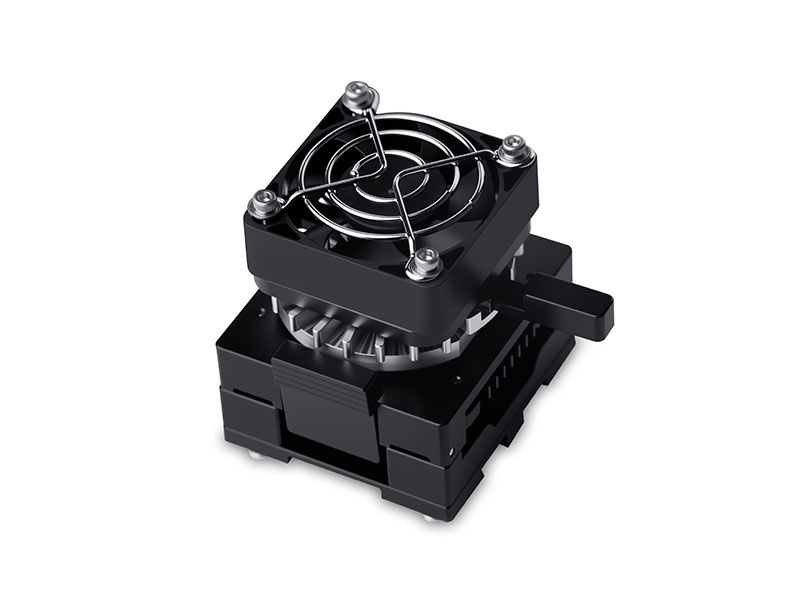
A burn-in test socket, also known as a burn-in test chamber, is a specialized piece of test equipment used to evaluate changes in items under harsh conditions such as high temperature, humidity, and pressure. The structure and performance of the burn-in test socket are critical to the quality and service life of the items being tested, so rigorous testing must be conducted to ensure product reliability and usability.
The basic structure of a burn-in test socket consists of three parts: the housing, the test chamber, and the control system. The housing is made of sturdy metal materials and is used to assemble the test chamber and control system while protecting the chamber from external harsh environments. The test chamber is the space where items are placed for testing, including variables such as temperature, humidity, and pressure, allowing simulation of different environmental conditions. The control system consists of a display, computer, temperature sensor, humidity sensor, etc., and is used to monitor and control the temperature, humidity, pressure, and other parameters inside the chamber.
The housing of a burn-in test socket is typically made of metal or plastic, offering strong heat resistance, corrosion resistance, oil resistance, and wear resistance. It also has good heat dissipation properties, effectively preventing heat evaporation inside the chamber and protecting it from external harsh environments. Variables such as temperature, humidity, and pressure inside the test chamber are generally monitored and controlled by temperature sensors, humidity sensors, and pressure sensors to ensure stability and accuracy within the chamber.
The control system of a burn-in test socket usually consists of a display, computer, temperature sensor, humidity sensor, pressure sensor, control module, etc. It can monitor and control variables such as temperature, humidity, and pressure inside the chamber in real time, and display these parameters on the screen to enable precise control of the chamber's internal conditions.
The safety of a burn-in test socket is also very important. Multiple protection features are typically implemented to ensure the safety of the test chamber. For example, upper and lower limits for temperature, humidity, and pressure are set. When parameters inside the chamber exceed the preset ranges, safety protection is automatically triggered to prevent accidents inside the chamber.
The internal structure of a burn-in test socket is complex and requires very high performance. Strict testing must be performed to ensure the reliability and usability of the items being tested. Traditional burn-in test sockets often use mechanical control, which offers low control accuracy and is easily affected by changes in ambient temperature, humidity, and other external factors. However, new types of burn-in test sockets that have emerged in recent years use computer control technology, providing higher control accuracy and better simulation of different environmental conditions to ensure product reliability and usability.

 WeChat
 WeChat Account
 Chinese
 English