1. The Essence of Burn-In Test Sockets
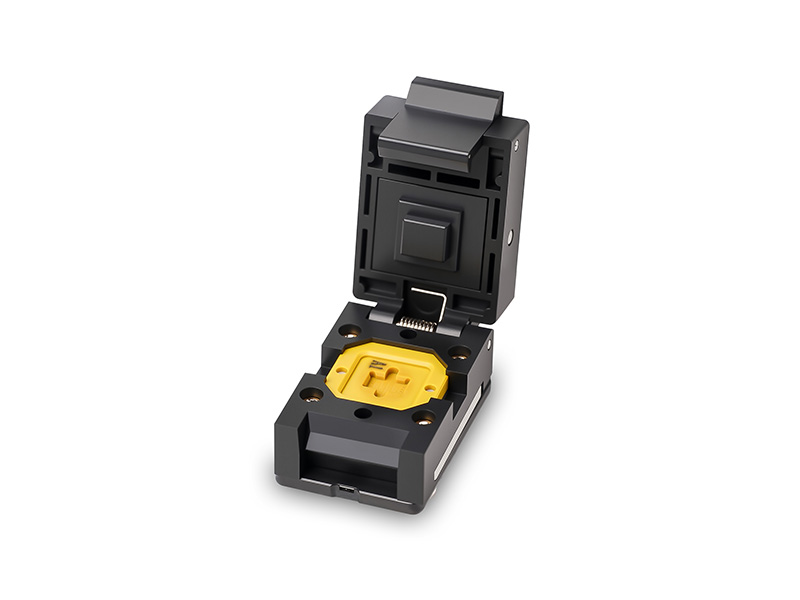
A burn-in test socket is a device used to test the aging characteristics of electronic components. It can simulate the aging process of electronic components under different environmental and temperature conditions, testing the durability and reliability of electronic components.
2. Structure of Burn-In Test Sockets
Burn-in test sockets are mainly composed of a temperature control unit, a heating unit, a test fixture, temperature sensors, an airflow control unit, a humidity control unit, etc.
3. Functions of Burn-In Test Sockets
1. Burn-in test sockets can simulate the aging process of electronic components under different environmental and temperature conditions, testing the reliability and durability of electronic components.
2. Burn-in test sockets can simulate real-world user environments, improving the reliability and durability of electronic components.
3. Burn-in test sockets can monitor the performance of electronic components under high-temperature, low-temperature, humid, and damp conditions, as well as changes in their status under high and low temperatures, thereby enhancing the reliability of electronic components.
4. Features of Burn-In Test Sockets
1. Burn-in test sockets have fast and reliable temperature control capabilities, enabling rapid burn-in testing.
2. Burn-in test sockets can achieve precise temperature control, allowing for better simulation of aging processes under various environmental conditions.
3. Burn-in test sockets support automatic control, enabling automated testing and improving test efficiency.
5. Applications of Burn-In Test Sockets
Burn-in test sockets are widely used in the electronic component manufacturing industry. They can effectively test the durability and reliability of electronic components under various environmental conditions, thereby improving the quality and reliability of electronic components.
6. Development of Burn-In Test Sockets
The development of burn-in test sockets is driven by the electronic component manufacturing industry. Electronic component manufacturers are continually striving to improve the quality and reliability of their products, so the development prospects for burn-in test sockets are very broad. In the future, burn-in test sockets will become more advanced, more precise, more reliable, and more practical.

 WeChat
 WeChat Account
 Chinese
 English