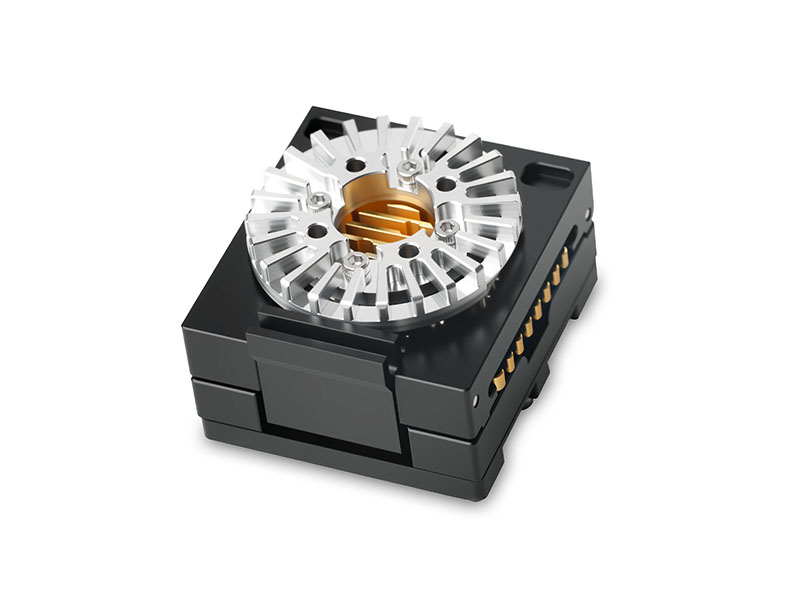
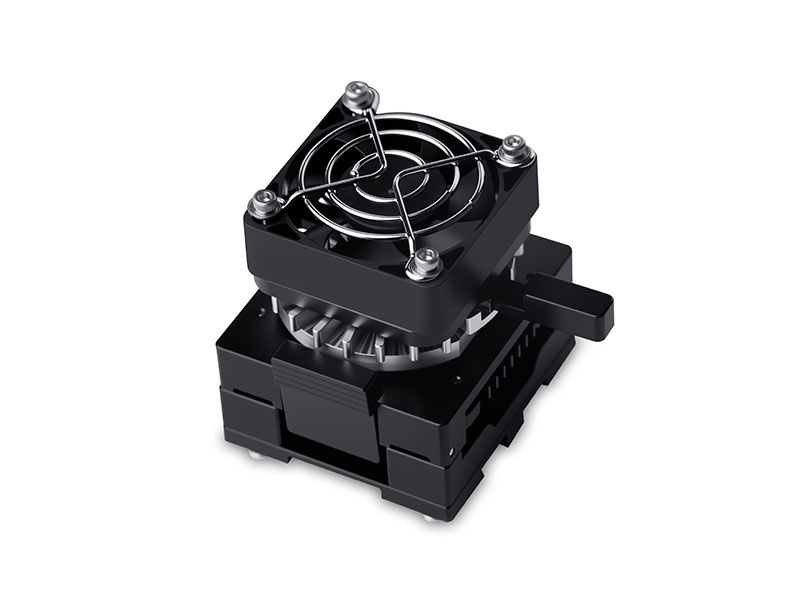
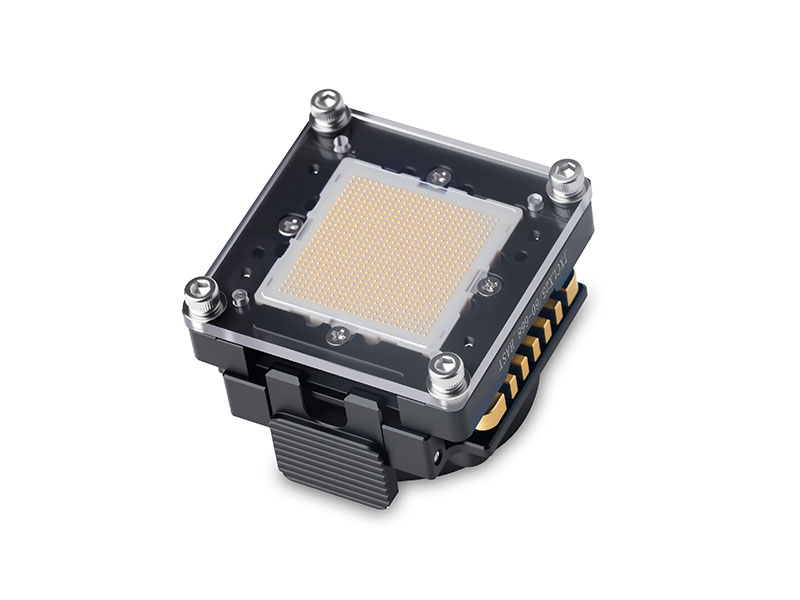
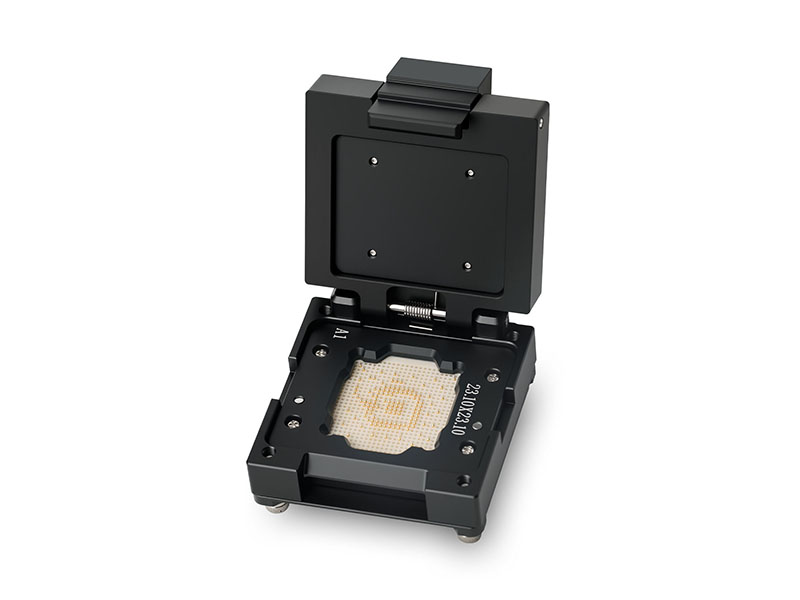
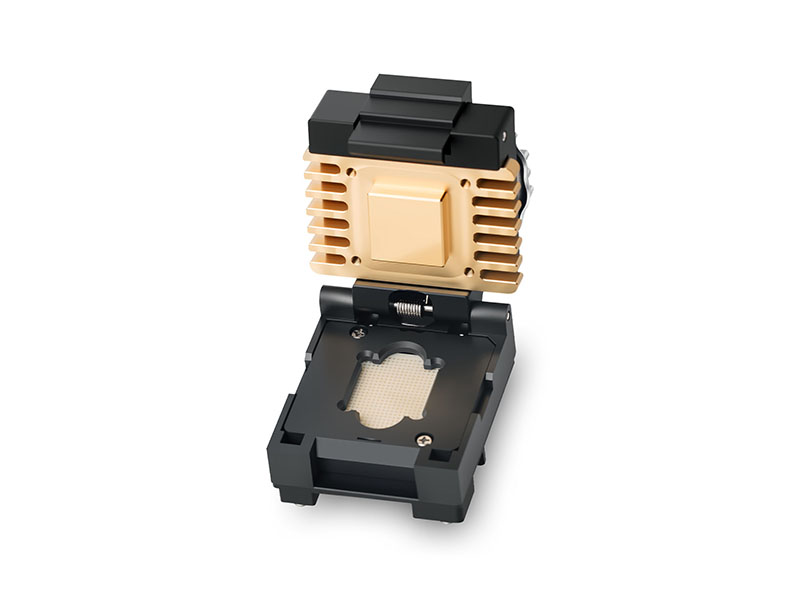
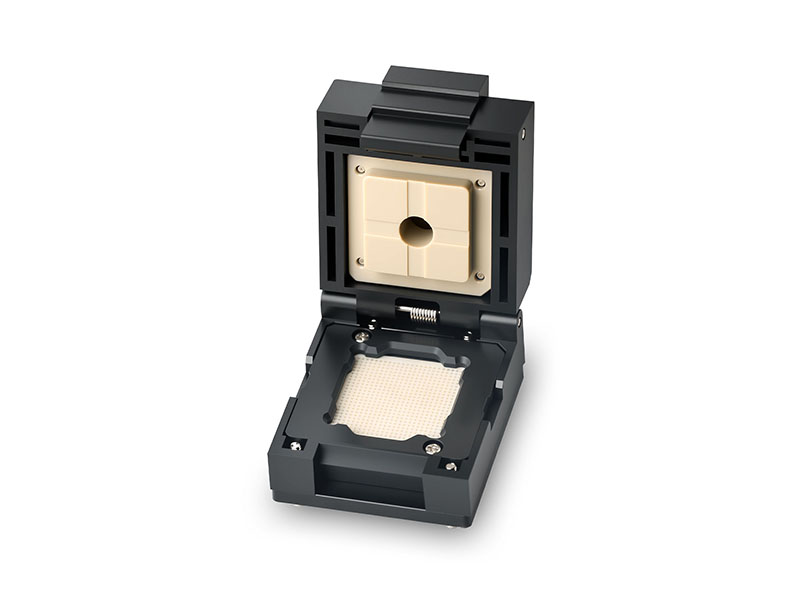
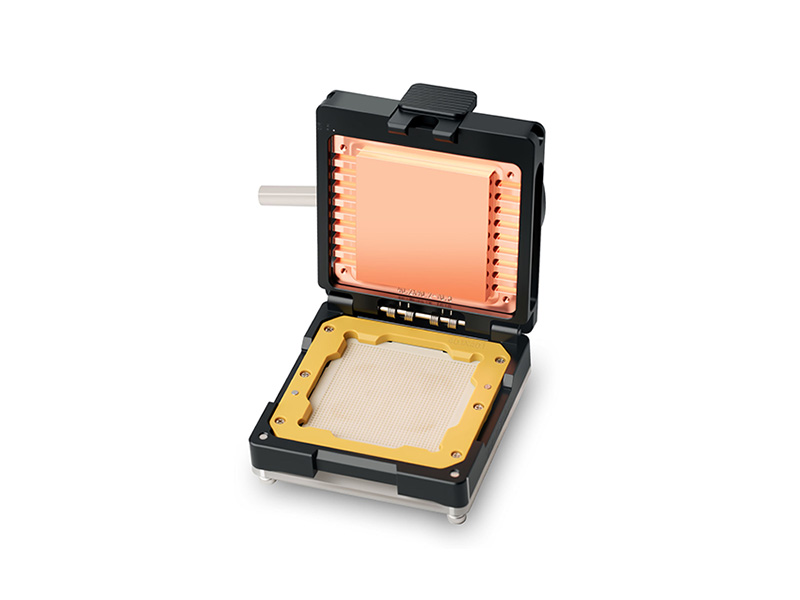
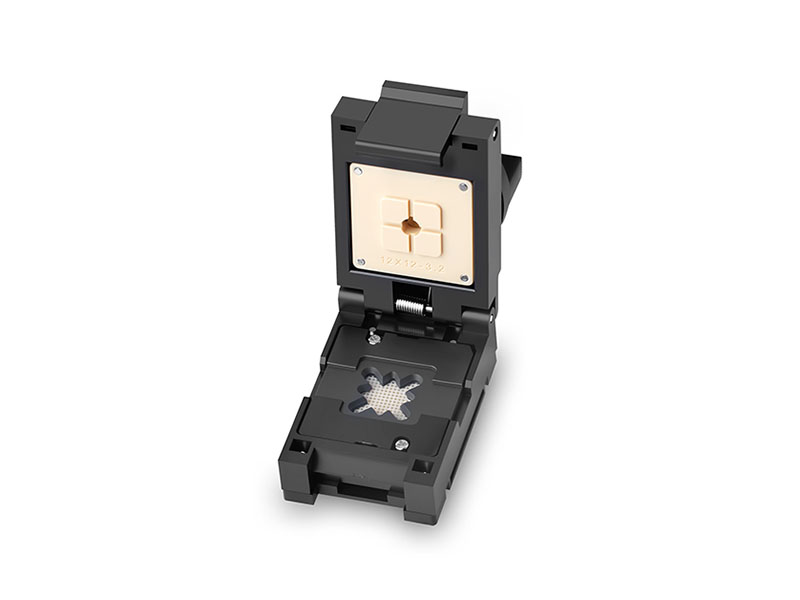
1. Structure of Burn-In Test Sockets The structure of a burn-in test socket consists of a frame, controller, temperature controller, data logger, sensors, and other components. The frame is the support structure of the burn-in test socket, used to mount other components. The controller is the core of the burn-in test socket; it controls the operating status of the socket based on external control signals and internal status signals. The temperature controller is used to regulate the temperature of the burn-in test socket, ensuring stable operation. The data logger is part of the burn-in test socket; it collects signals such as temperature and humidity and provides the operating status of the socket. Sensors are an important part of the burn-in test socket; they monitor environmental parameters such as temperature, humidity, and pressure, as well as the operating status of the socket.
A burn-in test socket, also known as a burn-in test chamber, is a specialized piece of test equipment used to evaluate changes in items under harsh conditions such as high temperature, humidity, and pressure. The structure and performance of the burn-in test socket are critical to the quality and service life of the items being tested, so rigorous testing must be conducted to ensure product reliability and usability. The basic structure of a burn-in test socket consists of three parts: the housing, the test chamber, and the control system. The housing is made of sturdy metal materials and is used to assemble the test chamber and control system while protecting the chamber from external harsh environments. The test chamber is the space where items are placed for testing, including variables such as temperature, humidity, and pressure, allowing simulation of different environmental conditions. The control system consists of a display, computer, temperature sensor, humidity sensor, etc., and is used to monitor and control the temperature, humidity, pressure, and other parameters inside the chamber.
1. Applications of Burn-In Test Sockets 1. Durability Testing of Electronic Products: Durability testing is an important method for evaluating the long-term performance of electronic products. Burn-in test sockets can simulate various environmental conditions to test the durability of electronic products and determine their long-term reliability. 2. Reliability Testing of Electronic Products: Burn-in test sockets can simulate various environmental conditions to test the reliability of electronic products and determine their level of reliability.
Test socket manufacturers are facing increasingly complex customer demands. Meeting customers' customized needs has become one of the key tasks for test socket manufacturers. Therefore, what measures should test socket manufacturers take to meet customers' customized needs? This article explores six aspects of how test socket manufacturers can satisfy customized customer requirements: understanding customer needs, designing custom products, improving production processes, providing comprehensive services, building good relationships, and reducing costs. 1. Understanding customer needs is an important first step for test socket manufacturers to meet customized customer requirements. Manufacturers need to understand customer market demands to better serve them. To achieve this, manufacturers can participate in customer events, conduct customer demand surveys, communicate directly with customers, and carefully listen to customer feedback to gain a better understanding of their needs.
1. Professional Test Socket Manufacturer 1) Product Quality: A test socket manufacturer should possess professional technical expertise to ensure product quality and stable performance, meeting customer requirements. 2) Manufacturing Processes: A test socket manufacturer should have well-established manufacturing processes to ensure product reliability and on-time delivery, ensuring that customers receive their products in a timely manner. 3) Service Capability: A test socket manufacturer should be capable of providing excellent service, ensuring that customer needs are met promptly, resolving issues, and offering timely technical support.
BGA test fixtures play a critical role in chip packaging testing. They help chip manufacturers perform performance testing to ensure chip reliability and quality. This article provides a detailed discussion of the importance of BGA test fixtures for chip performance testing, analyzing the following six aspects: 1. Features of BGA Test Fixtures BGA test fixtures are characterized by high precision and reliability, enabling them to meet complex chip packaging test requirements. They provide accurate test data to ensure chip performance and reliability. In addition, BGA test fixtures offer advantages such as fast testing, high production efficiency, and cost savings.
A burn-in test socket, also known as a burn-in chamber or burn-in rack, is a type of aging test equipment used for product testing. Its purpose is to test the aging characteristics, durability, and safety performance of products. When selecting a burn-in test socket, the following points should be considered: 1. Functional Requirements of the Burn-In Test Socket When selecting a burn-in test socket, the first consideration should be your own functional requirements, including the application scope of the burn-in test socket, as well as the intended use, environmental requirements, load specifications, etc. Based on current application needs, you can determine the required load specifications, as well as test environment conditions such as temperature and humidity, to identify the necessary performance level of the burn-in test socket.
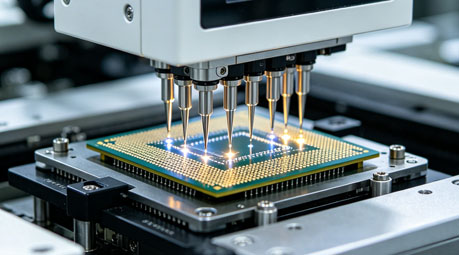
1. Structural Design of Chip Test Sockets A chip test socket mainly consists of two parts: first, the chip support base, which is used to support and position the chip; second, the test head, which is used to perform chip testing. The structural design of the chip test socket must meet the specific requirements of chip testing, featuring high precision, high stability, and strong anti-interference capability. 2. Model Selection for Chip Test Sockets The model selection of a chip test socket should be determined based on different chip testing requirements. Common types include single-chip test sockets, multimedia chip test sockets, and industry-specific chip test sockets. The appropriate model should be selected according to the chip testing requirements to meet various testing needs.

 WeChat
 WeChat Account
 Chinese
 English